Benefits of AI for Business Automation: How Companies Save Time, Cut Costs, and Boost Productivity with AI


 0 (0 reviews)

AI automation for business growth has long ceased to be a futuristic element before occupying the modern market. Over 78% of organizations reported artificial intelligence usage in 2024, up from 55% the year before. Solutions like generative AI for business automation allows companies to handle manual, repetitive tasks way faster and with minimized investments. Many firms offer artificial intelligence solutions from scratch to help businesses earn a competitive edge. In this article by Artjoker, we explore the specific ways in which AI in business process automation creates value and new capabilities for businesses today.
Why AI Automation Matters for Business in 2026
Interestingly, 66% of companies adopting smart agents report increased productivity. It is just one of numerous facts that prove the vital role of AI for business process automation today.

What Is the Role of AI in Business Process Automation?
The first and perhaps most obvious opportunity is the automation of routine processes. AI automation for small business is capable of independently performing many repetitive tasks, freeing human resources for more creative and strategic work. For example, mechanization in customer service management makes it possible to handle customer inquiries, generate reports, and predict customer needs, reducing response time and improving service quality.
Impact of AI Automation on Business Productivity
Companies cannot deny the numerous benefits of AI automation for small businesses. Artificial intelligence is capable of processing enormous volumes of data. By doing so, it is possible to detect hidden patterns. It is then easier for managers and executives to make weighted strategic business decisions.
What Is the Future of AI in Business Process Automation?
Artificial intelligence will keep automating labor-intensive tasks, freeing people from routine work. They will obtain more hours on core business tasks and their personal matters. ML, in its turn, will enable smart systems to perform tasks with minimum to no errors at all. Finally, artificial intelligence solutions for business process automation will be able to highlight key relationships and trends for different niches.
Key Benefits of Using AI for Business Automation
Business process automation with AI can save time and money, and those are not the only advantages.
Cost Savings Through Smart Process Execution
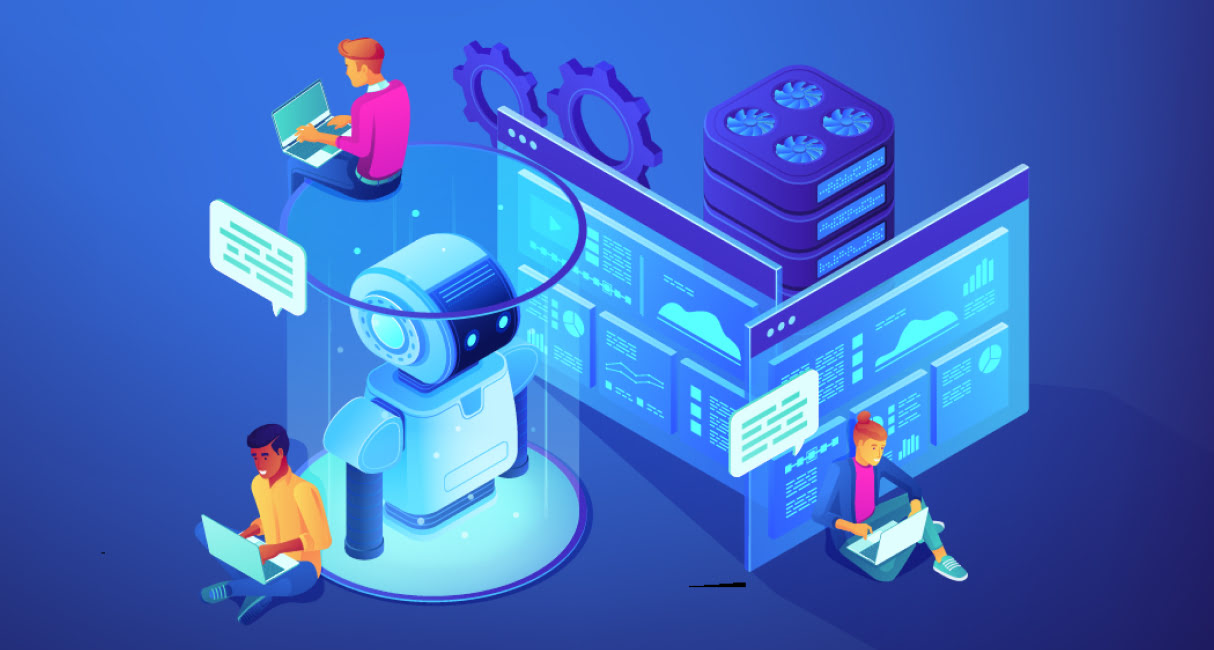
Artificial intelligence enables the mechanization of marketing and sales processes. It’s about selecting optimal strategies for expanding business. Smart technologies provide greater accuracy in forecasting demand for products and services. Automation can reduce the demand for human specialists, leading to significant savings on personnel and training.
Time Efficiency and Workflow Optimization
Increased time efficiency and speed is another critical benefit of AI agent development services. Artificial intelligence can process enormous volumes of data in seconds, performing analysis or generating responses much faster than a human.
Reduced Human Error and Enhanced Compliance
One of the benefits of AI automation in business include improved accuracy and compliance with standards. Agents should train according to clear guidelines. By following simple rules of using artificial intelligence, they can perform tasks consistently, without fatigue or subjective bias. Mostly, such fields as banking, finance and accounting benefit from meticulous verification.
Real-Time Insights and Data-Driven Decisions
Artificial intelligence delivers instant analysis of large, dynamic datasets. That is how businesses react to market changes faster and are well-prepared for various scenarios. This capability of AI automation services for businesses supports more accurate forecasting and proactive strategy adjustments.
AI Automation for Small Business: Cost-Effective Growth
AI-driven business automation is associated with reduced costs and increased revenues. Here is why.
How Can Small Businesses Save Money with AI Automation?
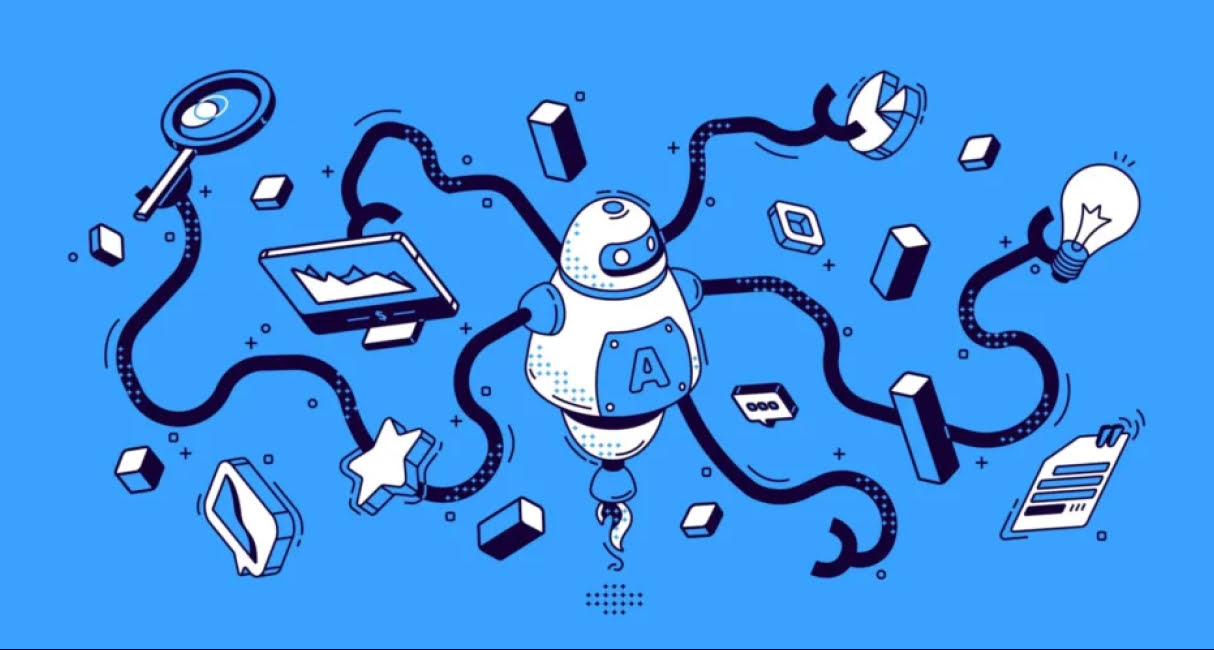
AI automation cost optimization business strategies streamline processes, reduce waste, and improve accuracy. For example, AI-powered predictive maintenance in manufacturing can minimize downtime and lower repair costs, resulting in significant financial savings for the business.
Generative AI for Business Automation on a Budget
Generative artificial intelligence allows businesses to automate multiple tasks. For instance, they can use these solutions for faster, more effective content creation or customer support. There are many affordable tools out there (e.g., chatbots, text/image generators). They are way less expensive than hiring extra staff.
Off-the-Shelf vs Custom AI Tools for SMBs
Off-the-shelf artificial intelligence tools are ideal for SMBs with limited budgets. These solutions might be enough basic mechanization features (e.g., scheduling or invoicing). On the other hand, custom smart solutions fit more when a business has unique, more complex processes. Choosing between them mainly depends on budget.
How to Integrate AI Automation into Existing Business Processes?
Discovery & Prioritization of Automation Use Cases
Banks, for instance, should set priorities when integrating AI automation in finance. For example, in case of customer support, those are chatbots that answer customer questions or provide information about products and services. When it comes to administrative tasks, those are bots that automatically process documents, send messages, schedule meetings, and more.
Expert Opinion «For demand forecasting, businesses will need algorithms that predict trends in demand for products or services, allowing businesses to optimize inventory and plan production. For service personalization, they will require algorithms that analyze consumer data, enabling companies to create personalized offers and recommendations. In fact, almost every industry has its own AI automation business case studies.»Oleksandr Prokopiev CEO of Artjoker

Choosing Between Prebuilt Tools and Custom AI Solutions
Businesses can start using prebuilt tools right away. However, they may lack certain functions and personalization. When flexible custom AI development is required, the team agrees in advance on success metrics and the scenarios that will be used for testing.
Expert Opinion «The custom AI in business automation development format is especially in demand in niche markets where ready-made platforms do not account for industry specifics, regulations, or legacy systems. In such cases, close collaboration with a subject-matter expert becomes essential, as accurate interpretation of data and model outputs is impossible without their insight. Joint work ensures that the final system truly helps people rather than complicating their tasks.»Oleksandr Prokopiev CEO of Artjoker
Key Integration Patterns: APIs, RPA, Low-Code Platforms
- APIs
APIs give developers access to powerful pre-trained models without requiring deep expertise in machine learning. When choosing an API, it is important to consider required functionality, latency, cost, integration complexity, and data privacy requirements. Examples include OpenAI API, Google Cloud Vertex AI, and AWS AI/ML.
- RPA
Robotic Process Automation (RPA) systems handle many simple tasks exceptionally well: filling out documentation, generating reports, sending emails, creating schedules, setting reminders or appointments, and supporting customer communication through chatbots. A software robot can replace many of the repetitive actions your employees perform every day, freeing their time for higher-value work.
- Low-Code Platforms
Low-Code and No-Code are approaches to application development that require minimal programming, often referred to as Zero Coding. This methodology solves one of the key challenges in IT — shortening the cycle from idea to a functioning business process — significantly reducing time-to-market. Low-Code does not replace professional developers, but it helps shorten product development time and enables teams to enhance solutions with new capabilities more quickly.
What to Look for in AI Automation Tools?
Customizability, Scalability, and Model Transparency
Artificial intelligence tools assist with adapting models and workflows to their unique processes. It means a tailored approach rather than having to change internal processes. Scalability ensures the system can handle massive volumes of data and tasks. At last, model transparency provides clear insight into how artificial intelligence makes informed decisions.
Monitoring, Retraining and ROI Tracking
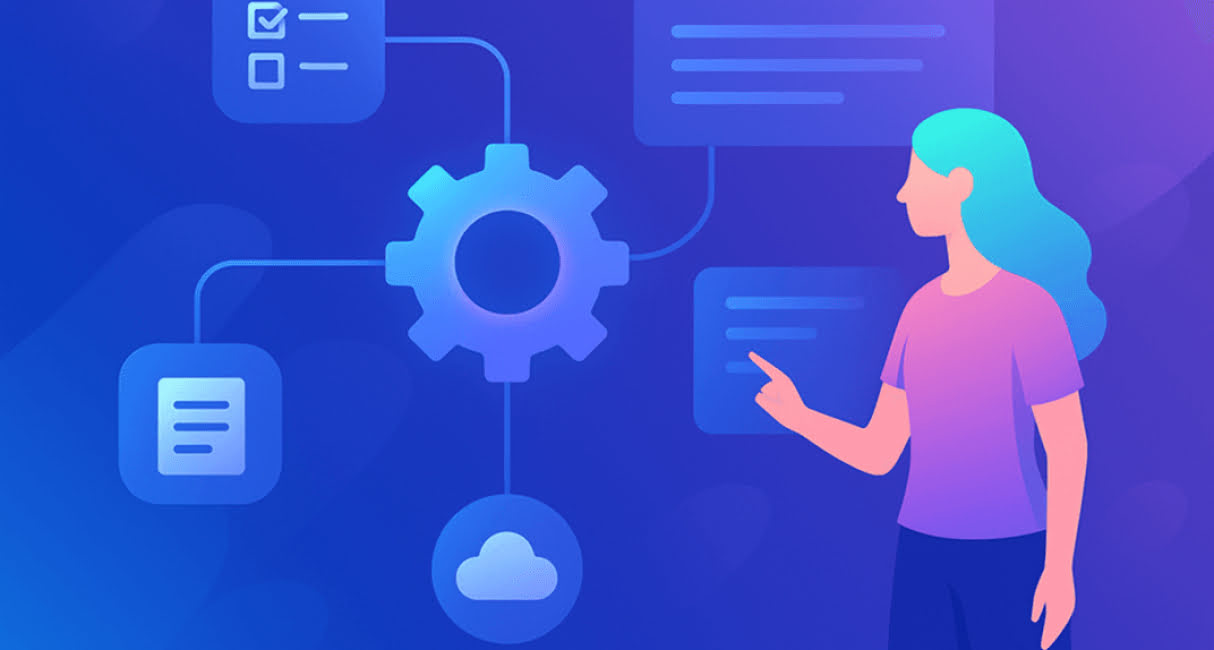
Continuous monitoring allows businesses to detect and often even prevent failures. This way, they can better predict what will work better. Regular retraining is necessary so that the responsible staff is up-to-date with the latest innovations. As for return-on-investment, this indicator helps teams measure efficiency gains.
Challenges of AI Adoption for Business Automation
Except for the advantages, it is necessary to consider possible risks of business process automation using AI.
- Data security and confidentiality: Using external platforms and transmitting sensitive data requires special attention to security. Links to GPT-based outputs can “circulate on the internet,” whereas Assistants provide more controlled access. Sending data to smart developer platforms also requires a clear understanding of their usage policies.
- Data quality (“garbage in, garbage out”): The effectiveness of artificial intelligence solutions critically depends on the quality and structure of the data they are trained on or operate with. If the input data is chaotic or inaccurate, the artificial intelligence output will also be incorrect.
- Integration complexity: Embedding artificial intelligence agents into existing business processes and IT infrastructure may require significant effort and technical expertise.
- “Glitches” and errors: Although artificial intelligence follows instructions, complex requests or unforeseen situations can lead to incorrect behavior or glitches. Oversight and verification of results are necessary.
- Ethical considerations: Bias in training data, responsibility for artificial intelligence errors, and the impact on employment are all issues that require careful attention.
- Dependence on external platforms: Using cloud-based artificial intelligence services means relying on their stability, pricing, and policies.
Whether you’re looking for AI automation for tech business or another field, keep in mind these challenges.

Artjoker’s Expertise in AI-Powered Business Automation
Looking for more AI cross-sell automation case studies for small businesses? For one of our clients, Artjoker built LeadStream – a custom AI-powered chatbot. The company demanded a single communication hub which would simplify support workflows for SMBs. The solution automatically sorted messages, integrated with CRM systems, and filtered spam. The solution resulted in a 30% increase in operational efficiency and 25% faster response times. This case highlights our expertise in delivering scalable AI powered business process automation.
Why Partner with Artjoker for AI Business Automation?
- Over 19 years of software development
- 7+ years of hands-on AI/ML experience
- Work with multiple industries
- Proven DevOps and artificial intelligence cases
- Full-cycle delivery (from discovery to scalable rollout and maintenance)
- Expertise in enterprise integrations
- Full compliance to GDPR, AML/KYC, banking standards, etc.
- 30-90% efficiency gains
- Flexible engagement models for various budgets and team sizes
AI Automation as the Catalyst for Faster Business Growth
Artificial intelligence automation has moved far beyond buzzwords. Today, it enables organizations to save time and minimize costs. Over 78% of businesses already adopt smart technologies and report higher productivity. From customer service to predictive analytics and workflow optimization, Artjoker offers the expertise to build scalable systems that deliver measurable impact from day one. Hurry for a free consultation - we’ll boost your business results ASAP!
What are the key benefits of using AI for business automation?
First of all, artificial intelligence reduces manual workload, speeding up all processes. Staff can focus more on core business activities instead of wasting time on secondary tasks. This technology also allows for more biased decision-making.
How can AI automation scale with business growth?
Smart systems can handle increasing data volumes, no matter how complex the information is. Thus, there is no need to dedicate extra costs per personnel or extra equipment.
How can small businesses save money with AI automation?
Small businesses typically decrease labor costs and minimize errors that humans can make. It allows them to cut operational expenses and boost revenue potential.
How to integrate AI automation into existing business processes?
Start by identifying repetitive or manual tasks that prevent staff from core business tasks. Then, explore the market and choose tools that integrate with current systems. Also, expand automation while monitoring performance.
What are some of the key things businesses look for in AI automation for customer support processes?
Companies seek fast response times, consistent answers, integration with CRM systems, multilingual support, scalability, and strong analytics to improve service quality and customer satisfaction.
- Why AI Automation Matters for Business in 2026
- Key Benefits of Using AI for Business Automation
- AI Automation for Small Business: Cost-Effective Growth
- How to Integrate AI Automation into Existing Business Processes?
- What to Look for in AI Automation Tools?
- Challenges of AI Adoption for Business Automation
- Artjoker’s Expertise in AI-Powered Business Automation
- Why Partner with Artjoker for AI Business Automation?
- AI Automation as the Catalyst for Faster Business Growth

Nataliia Brynza
Chief Operating Officer
Conclusion
AI automation is no longer a nice-to-have — it’s a competitive necessity. Companies that use AI to automate workflows save time, reduce costs, minimize errors, and make faster, data-driven decisions. From small businesses to large enterprises, AI turns routine operations into scalable, efficient systems that fuel long-term growth.
Want to automate smarter, not harder?
Talk to Artjoker’s experts and discover how AI automation can streamline your processes, boost productivity, and deliver measurable results — starting with a free consultation.
Similar articles
View all


your business
together
- PROJECT INQUIRIES info@artjoker.net
- CALL US +1 213 423 05 84
contact us:
 USA
USA
 Estonia
 Ukraine
 Norway