AI Virtual Assistants vs. Chatbots: Which Drives Better Customer Engagement in 2026?


 0 (0 reviews)
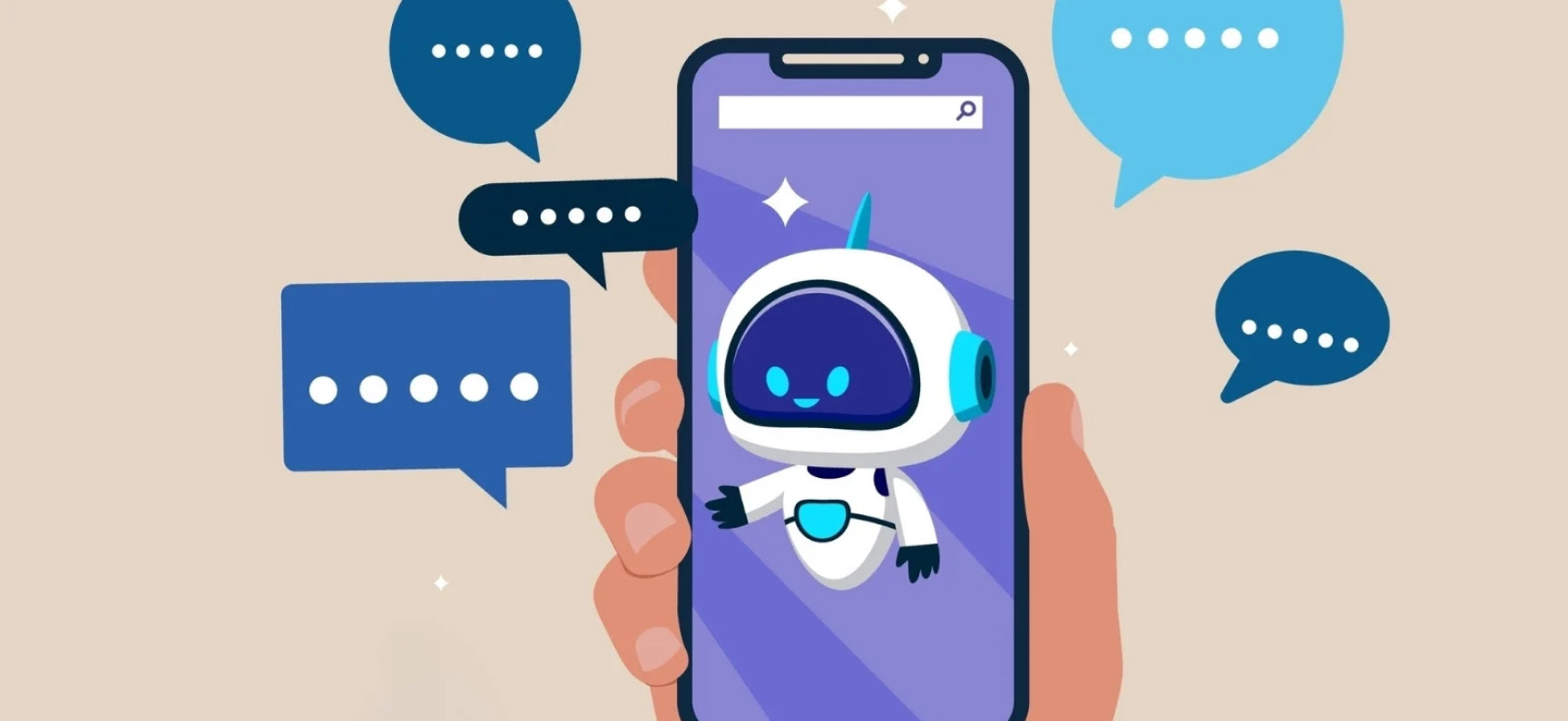
Many businesses today try to choose between conversational AI chatbot vs assistants smartly. According to Deloitte, by 2027, 50% of the companies worldwide will already be using chatbots or virtual assistants as part of pilot projects. In other words, these technologies will soon become a familiar part of the business world.
While the first ones offer 24/7 accessibility, instant responses, and cost reduction, the assistants focus more on increased productivity and free time. Artjoker explains who wins in the AI virtual assistants vs. chatbots battle and when.
What’s the Core Difference Between a Chatbot and an AI Virtual Assistant?
Chatbot: Simple Automation for Repetitive Tasks
A chatbot is a computer program that interacts with users by imitating human communication. Another definition could sound this way: chatbots are a family of programs that use human speech recognition in both voice and written form to perform various tasks or communicate with users.
Chatbots can relieve you of many challenges in both customer support and internal process optimization. They do not take weekends or sick leave, work 24/7, and once they are set up, your employees gain time for more important and complex tasks that were previously sacrificed to handle mandatory but routine issues.
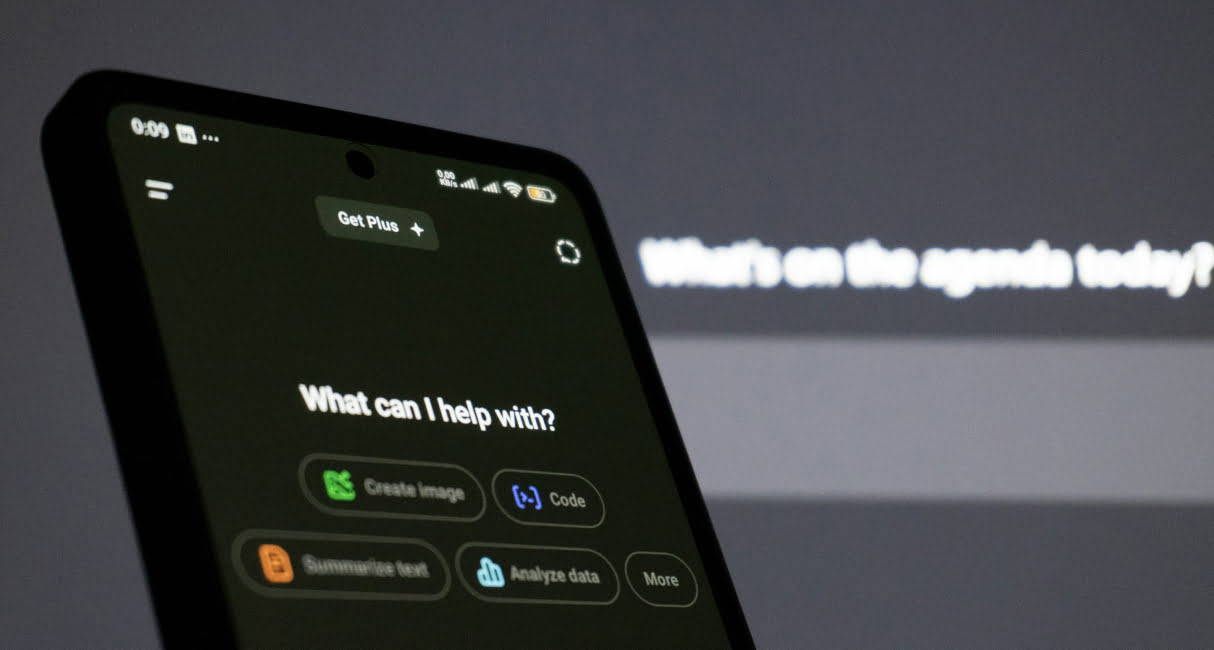
 80% of consumers are more likely to make a purchase from companies using artificial intelligence and chatbots.
The cost of interaction via a chatbot is about $0.50, while customer support through a human costs around $6.
90% of marketers who use AI tools apply them for fast data-driven decision-making, including data collected by chatbots.
95% of customer interactions worldwide are already partially or fully automated thanks to AI and chatbots.
Expert Opinion «You can build a bot yourself using the constructor or delegate development to programmers. At Artjoker, chatbot creation is available on all pricing plans. Our bots designed from scratch can be integrated into website chats, popular messengers, and social networks. Additionally, we can integrate bots developed by third parties across all these channels.»Oleksandr Prokopiev CEO of Artjoker

AI Assistant: Smart Support with Context Awareness
A virtual assistant is software that performs tasks on behalf of a user. The first systems of this kind appeared back in the 1980s, but one of the closest early implementations was an assistant installed on the very first IBM smartphone, released in 1994. The first voice assistant installed on a modern smartphone was Apple’s Siri, introduced in October 2011.
Methods of interacting with virtual assistants include:
- Text messages. Common when working with chatbots.
- Voice commands. As with Siri, Amazon Alexa, and many other modern voice assistants.
- Uploading an image. As in the case of Samsung Bixby on the flagship Galaxy S8.
Some virtual assistants offer users several ways to interact with them at once. For example, you can give commands to Google Assistant via chat in Google Allo. Below you can see the AI assistant vs chatbot platforms comparison table.
| Aspect | Chatbot | AI Virtual Assistant |
|---|---|---|
| Core Purpose | Answer predefined questions and handle simple, repetitive requests | Perform multi-step tasks, make decisions, and assist users across workflows |
| Capabilities | Basic Q&A, scripted conversations, simple form filling | Contextual conversations, task execution, proactive actions, decision support |
| Technology | Rule-based logic, basic NLP, intent matching | LLMs, machine learning, reasoning engines, memory, tool & API integration |
| Context Awareness | Limited or session-based context | Persistent context and user history across interactions |
| Learning & Adaptation | Minimal learning; requires manual updates | Continuously improves through feedback, retraining, and usage data |
| Workflow Execution | Cannot execute complex workflows | Can trigger actions, call APIs, update systems, and coordinate processes |
| Human Handoff | Simple escalation to human agent | Smart handoff with full context, recommendations, and summaries |
| Typical Use Cases | FAQs, basic customer support, lead capture | Customer support automation, scheduling, analytics, operations, decision assistance |
| Scalability | Scales for simple interactions | Scales across departments and complex business operations |
| Business Impact | Reduces basic workload | Improves efficiency, decision speed, and operational outcomes |
Pros and Cons: Which Tool Suits Your Business Goals?

When to Choose a Chatbot?
It is predicted that chatbot technology will find the widest application in B2C industries. Chatbot messaging works especially well for delivery services. The main focus on chatbot development comes from businesses. Obviously, if you own a company, a communication robot is not an automatic must-have, and far from every industry needs to implement this technology.
Expert Opinion «For example, in an online clothing store, it is possible to upsell additional items during checkout through a chat interaction. To do this, a script is created that suggests items that complement the outfit. To summarize, business chatbots are most often created either for ordering simple single products or for working with relatively small amounts of input data. Truly intelligent algorithms capable of replacing a live consultant are still encountered less frequently.»Oleksandr Prokopiev CEO of Artjoker
When AI Assistants Deliver Better Results?
Virtual conversational agents have proven particularly effective in the food delivery sector, where it is easy to add a product catalog with special offers and accept orders quickly. Imagine that your employees have a million tasks to handle, from processing customer requests to managing social media. There are only minutes to implement something important, and some tasks have to be done simultaneously. This is where virtual assistants step in.
Such solutions can fill these gaps and support you when it matters most. Virtual assistants can replace traditional ways of processing and analyzing data. This way, businesses save both time and resources.
Conversational AI That Changes Operations
With 1000+ delivered projects and deep expertise in artificial intelligence, NLP, LLMs, and MLOps, Artjoker builds conversational systems that teams actually use — and customers actually appreciate.
Start with ArtjokerWhat Could Go Wrong with the Wrong Choice?
Choosing the wrong approach can quietly undermine your entire automation strategy. When companies deploy simple chatbots where AI virtual assistants are needed, they end up with frustrated users, broken workflows, and no real business impact beyond basic deflection.
On the other hand, overengineering with complex assistants where a chatbot would suffice wastes budget, slows delivery, and creates unnecessary operational complexity — turning AI from a solution into a liability.
To avoid wrong choices and wasted time, let Artjoker build a virtual assistant or a responsive chatbot for your business. We also offer MLOps services, NLP services, LLM development, and more.
What Are the Real Benefits for Your Business?
Faster Response Time & 24/7 Support
Chatbots have no non-working hours or days off. Your virtual assistants can be located anywhere in the world. They respond to the customer’s queries immediately while human agents may be unavailable during certain hours or due to the breaks. These tools may solve urgent questions or redirect users to human representatives in case of complex issues.
Saved Time & Other Resources
Virtual assistants can save your company time and resources. These robots allow employees to focus on more important business tasks. They can take over many time-consuming tasks like manual typing. Doc organization and evaluation is another example of what chatbots and virtual assistants can do. In other words, chatbots and virtual assistants increase overall efficiency.

Personalized Customer Experience
Imagine that your virtual assistant can work around the clock, providing customer support even outside business hours. Thanks to smart assistants, businesses can significantly increase customer loyalty. For example, a company can create an assistant that responds to inquiries 24/7, without any breaks.
Customers do not have to get tired and annoyed in endless waiting lines. Besides, virtual assistants can evaluate the data accurately. Based on their findings, they can find an individual approach to every customer.
Lower Operational Costs
Virtual assistants unchain businesses from daily low-level tasks. A virtual assistant does not require training or operational expenses, yet brings a revolution in financial prudence by eliminating unnecessary costs and bringing order to budget constraints.
Expert Opinion «Virtual assistants are experts at delivering premium customer services, often not worse than human professionals. They do not need a separate place in the office or extra equipment and tools, cutting costs a lot. To save both time and money (by roughly 40%), turn to the AI chatbot development services. Luckily, Artjoker knows how to deal with that - reach out to us today to estimate the price of your project!»Nataliia Brynza COO of Artjoker

Where Are These Technologies Used?
To understand the difference between AI assistant and chatbot better, we suggest that you look at several examples from various industries.
From Chatbots to Intelligent Assistants That Scale
Whether you’re starting with a chatbot or upgrading to a full smart assistant, Artjoker delivers production-ready solutions. Our projects like CallChecker (10x faster QA) and MyCredit (100,000+ requests/month) are the best proof.
Get AI Strategy SessionExamples from E-commerce, Fintech, Telecom & Healthcare
- E-commerce
E-commerce assistants ensure that websites are filled with accurate, up-to-date content. Chatbots are perfect for answering frequently asked questions about orders. Those issues may include payment status or delivery dates. These smart tools help deflect simple inquiries during peak traffic.
- Fintech
Tiring operations with balance checks and transactions in general - these tasks in fintech can be delegated to virtual assistants for boosted speed and efficiency. Moreover, they can deal with loan servicing and even fraud monitoring. As a result, a financial intuition gets an accurate risk assessment.
- Telecom
When it comes to the field of telecom, chatbots typically resolve standard issues like data usage limits. Virtual assistants manage more severe and urgent issues like billing disputes and smart routing.
- Healthcare
Chatbots in the area of medicine are good for appointment reminders and basic intake questions. Virtual assistants coordinate scheduling appointments with doctors, insurance verification, etc. They maintain compliance and audit trails.
Use Case Comparison: Chatbot vs AI Assistant in Action
This table illustrates conversational AI assistant vs traditional chatbots comparison based on different real life scenarios.
| Scenario | Chatbot in Action | AI Virtual Assistant in Action |
|---|---|---|
| Loan Application (Fintech) | Collects basic applicant details and answers FAQs about loan terms. Escalates to a human once the request becomes complex. | Pulls credit data, validates documents, generates a risk summary, assists underwriting, and updates the applicant in real time — escalating only edge cases. |
| Customer Support Call (Telecom / Utilities) | Guides the caller through menu options and provides scripted answers. Transfers the call if the issue doesn’t match predefined flows. | Detects intent from free-form speech, checks account and network data, resolves the issue or routes the call with full context — reducing AHT and repeat calls. |
AI Chatbot vs AI Assistant Platforms 2026 Comparison
Our team has tried many platforms to pick several best to illustrate AI chatbot vs ai assistant.
Artificial Intelligence Chatbot Platforms
1) Intercom
Intercom’s chatbot was basically created to deflect common support questions. Those are questions about the product, delivery, payments, etc. It works well for FAQs, onboarding prompts, and basic ticket routing. For deeper logic or more specific, complex questions, this tool might lack features.
2) Drift
Drift focuses on sales and marketing conversations. It’s effective for inbound pipelines, but not intended to run complex, multi-step operational processes.
3) Tidio
Tidio is popular with SMBs for quick deployment and low setup effort. It handles repetitive customer questions well. However, when it comes to backend integrations, the functionality seems limited.

Virtual Assistant Platforms
1) Microsoft Copilot Studio
Copilot Studio enables the creation of AI assistants that connect deeply with business systems and workflows. It’s well suited for enterprises that need assistants to reason, act, and operate within governed environments.
2) Google Dialogflow CX
This solution is excellent for utilities and telecom. Dialogflow CX from Google stands out from many competitors as it is able to deal with complex conversations instead of the basic queries. Another feature which makes it special is large-scale deployments.
3) Amazon Lex
Amazon Lex is a strong option when assistants need to trigger actions, call APIs, and operate at scale. The solution powers assistants that can handle both voice and chat use cases. It cooperates closely with AWS services.
This table compares chatbot vs. AI virtual assistant based on these leading platforms.
| Parameter | AI Chatbot Platforms | AI Virtual Assistant Platforms |
|---|---|---|
| Cost | Lower upfront cost, subscription-based | Higher initial investment, better long-term ROI |
| NLP & Context | Basic intent recognition, limited memory | Advanced NLP, context retention, reasoning |
| Integrations | Shallow integrations (CRM, helpdesk) | Deep API, system, and workflow integration |
| Customization | Limited logic and flow control | Fully customizable agent behavior and logic |
| Typical Scope | FAQs, simple support, lead capture | End-to-end processes, decision support, automation |
| Scalability | Scales for volume, not complexity | Scales across departments and operations |
What Does It Cost to Implement a Chatbot or an AI Assistant in 2026?
Ready to make use of conversational AI chatbot development service but have no idea how much it will cost you?
Factors That Affect Pricing
-
Technology stack
If you’re looking for ways to save money or have a limited budget, select rule-based chatbots or no-code tools. If you plan to invest more, think about artificial intelligence assistants. They may require LLMs and MLOps, making their cost higher. Still, they deliver more value at scale. -
Scope of functionality
A chatbot answering 10 static questions costs significantly less than an assistant who can do more. The first solution is okay for FAQs. The second option suits better when it comes to huge data retrieval, decision logic, etc. -
Channels
Chat-only solutions are the most affordable. However, users often stay dissatisfied with this option alone as they expect to hear the support representative. Voice agents can calm them down. You may also benefit from omnichannel orchestration, combining chat with voice and CRM). -
Integrations with internal systems
Connecting to CRM, ERP, billing, LOS, or legacy systems often represents a major part of the budget — and a major driver of real ROI. -
Scale & performance requirements
Handling hundreds of conversations per month is cheap; handling tens of thousands with low latency, monitoring, and failover is not.
Estimated Ranges for SMB vs Enterprise
SMB (Small & Mid-Sized Businesses)
- Chatbot (FAQs, basic support): $5,000–$20,000
- AI assistant (limited workflows, chat-only): $20,000–$60,000
Enterprise / High-Scale Operations
- Advanced chatbot (multi-channel, integrations): $40,000–$100,000+
- AI virtual assistant (agentic workflows, voice, governance): $100,000–$300,000+
Use this checklist to build a realistic budget:
- Number and types of communication channels
- Level of customization vs templates
- Depth of integration with various systems
- Compliance & security requirements
- Number of use cases
- Expected conversation volume & peak load
- Monitoring & analytics
AI Assistant and Chatbot Projects by Artjoker
Still have doubts which one to choose in AI chatbot vs ai virtual assistant? No worries - at Artjoker, we deal with both!
Callcheker – AI Voice Assistant for Telco
Callchecker was built to solve a classic telecom problem: massive call volumes with limited visibility into quality and performance. Artjoker developed an AI voice assistant that automatically transcribes, analyzes, and evaluates 100% of calls in real time, applying configurable business and compliance rules.
This enabled telco teams to move from manual sampling to full QA coverage, reduce evaluation time by up to 10x, and gain continuous, objective insights into agent performance and customer experience.
MyCredit – Smart Assistant for Microloans
MyCredit needed to scale loan servicing and customer support without scaling headcount. Artjoker implemented a smart conversational assistant that handles routine borrower requests, supports underwriting and collections workflows, and integrates with internal loan systems.
As a result, MyCredit processes 100,000+ requests per month, reduces manual workload for agents, and maintains consistent service quality across high-volume microloan operations.
Why Choose Artjoker to Build Your Conversational AI?
-
Proven experience in real AI projects
We build conversational AI that works in production — across finance, telecom, eCommerce, and customer support — not just demos or pilots. -
Custom development, not templates
Every chatbot or AI assistant is designed around your workflows, data, and business logic, ensuring real operational impact. -
Fast and reliable integration
We integrate conversational AI with CRMs, billing systems, loan platforms, and legacy infrastructure without disrupting ongoing operations. -
Built for scale, governance, and security
Monitoring, compliance, audit logs, and performance control are embedded from day one. -
Long-term support and optimization
We don’t disappear after launch — we help you improve accuracy, reduce costs, and scale usage over time.

If you’re looking to move beyond basic chatbots and build conversational AI that actually changes how your business operates, Artjoker is built for that journey. Get in touch now →
- What’s the Core Difference Between a Chatbot and an AI Virtual Assistant?
- Pros and Cons: Which Tool Suits Your Business Goals?
- What Are the Real Benefits for Your Business?
- Where Are These Technologies Used?
- AI Chatbot vs AI Assistant Platforms 2026 Comparison
- What Does It Cost to Implement a Chatbot or an AI Assistant in 2026?
- AI Assistant and Chatbot Projects by Artjoker
- Why Choose Artjoker to Build Your Conversational AI?

Nataliia Brynza
Chief Operating Officer
Conclusion
In 2026, the debate between chatbots and AI virtual assistants has almost reached its peak. They have different applications and perks. Chatbots remain effective for simple, high-volume interactions. Virtual helpers are better at recognizing context, taking action, and supporting users. To select the right option, businesses should have a clear strategy, governance, and integration plan. That’s where many conversational AI initiatives fail — and where experience makes the difference.
Similar articles
View all


your business
together
- PROJECT INQUIRIES info@artjoker.net
- CALL US +1 213 423 05 84
contact us:
 USA
USA
 Estonia
 Ukraine
 Norway