AI Integration in Business: Strategies, Benefits and Real-World Examples for 2026


 0 (0 reviews)

By 2025, AI business integration has long since moved beyond laboratories and test platforms. AI integration in business processes helps automate routine tasks, make strategic decisions, and open up new business models. Today, for many companies, it is simply one component of business processes and an important factor in competitiveness. In 2025, 7 out of 10 companies use the benefits of AI integration in business for at least one task, and most will have integrated algorithms into their daily work.
Artjoker looked into how companies use artificial intelligence for development, which AI integration strategies for businesses have already proven their effectiveness, and what to look for when implementing new solutions in your business.
Why AI Integration in Business Is a Strategic Priority in 2026?
In 2025, about 78% of companies worldwide report using artificial intelligence, making it a core business tool. Many organizations admit increases in productivity and decision making. They also explore new innovation opportunities and minimize costs and time. Meanwhile, the global artificial intelligence market’s value is surging — with analysts forecasting the peak growth rates between 2025 and 2030. Harvard Business Review reports that artificial intelligence increases the number of potential customers by approximately 50%, reduces communication time with the audience by 60-70%, and cuts costs by 40-60%.
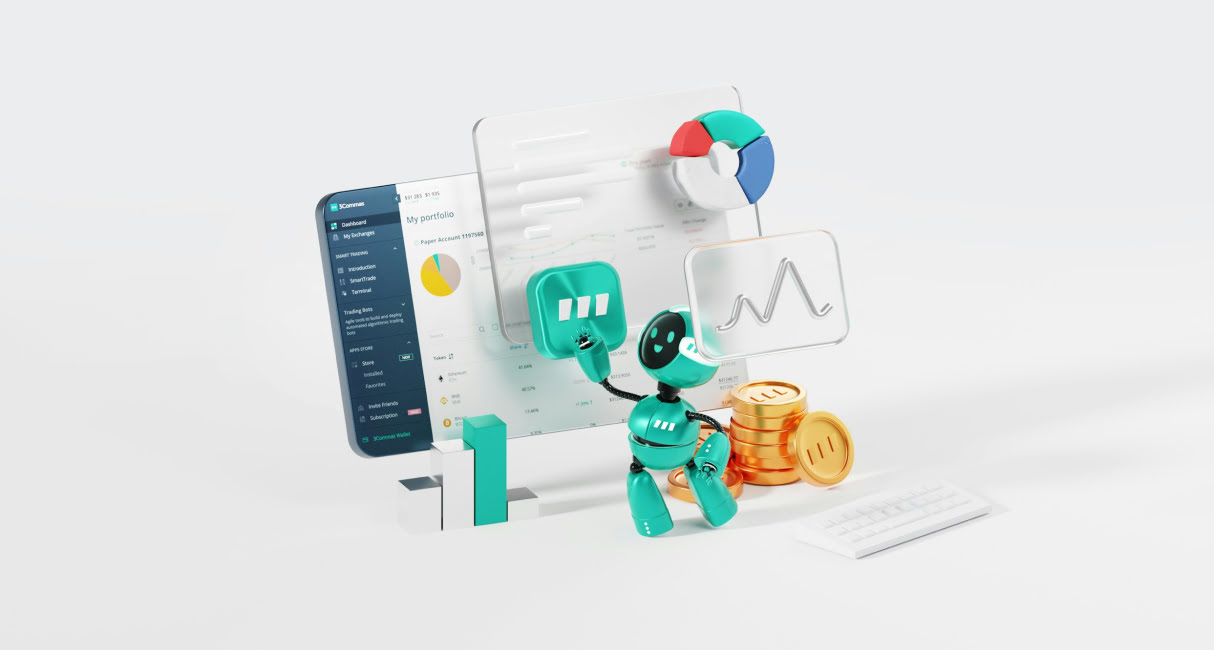
Based on previous communications and social media posts, smart technology displays information according to priority criteria: from users who are more likely to become customers to less promising deals. Finally, it is useful to apply generative AI integration services for business solutions to send personalized messages and notifications to multiple customers. According to data from PwC, half of the tech giants have already included artificial intelligence in their long-term development strategy.
Key Benefits of AI Integration in Business Processes
When implemented correctly, new tools and custom AI integration services for small businesses provide businesses with a number of advantages:
- Cost reduction. Automating routine processes can reduce operating costs by 20–30%.
- Increased efficiency. According to some research studies, large-scale implementation of artificial intelligence increases process efficiency by more than 40%.
- Scalability. Algorithms work as “virtual staff,” expanding business capabilities without increasing headcount.
- Quality of decisions. Artificial intelligence processes huge amounts of data in real time, which increases the accuracy of management decisions and reduces the influence of the human factor.
- Long-term value. The economic potential of artificial intelligence is estimated at trillions of dollars in profits annually.
- Investment attractiveness. Companies with a well-thought-out AI implementation strategy gain more trust from investors.
These benefits of automating business processes with AI integration software can be proven by the fact that 64% of businesses report that artificial intelligence drives revenue benefits at the use-case level. Early adopters have already gained a competitive advantage through improved data-driven insights. Some of them did that with the help of professional AI agent development services like Artjoker.
AI Integration Strategies for Businesses
Any successful AI integration for business growth begins with planning, followed by project implementation. First, it is necessary to determine where exactly artificial intelligence technologies will be used and what real assistance they will provide. After that, you need to perform all the necessary calculations (technical and financial) that will enable you to analyze the effectiveness of smart implementation and identify areas for optimization.
Expert Opinion «Training employees will smooth out any transitional issues during the implementation of artificial intelligence in certain processes and ensure that staff adapt to the new realities as quickly as possible. The result will be the retention of key specialists, a healthy atmosphere in the team, and high work efficiency.»Oleksandr Prokopiev CEO of Artjoker


Custom AI Integration for Specific Business Needs
AI integration into your business is the practical implementation of the project. By this stage, staff training should be complete, and all tools, equipment, or other necessary solutions (depending on the company's field of activity) should be ready.
All that remains to be done is to press the symbolic “start” button to launch the project. In some cases, additional time may be required for testing and configuration, especially when it comes to integration of AI in business using several different processes that interact with each other in complex ways.
- Build a scalable data foundation to ensure clean, structured, and accessible data for AI.
- Choose between modular artificial intelligence features or full end-to-end integration based on maturity and budget.
- Implement strong MLOps practices for monitoring, retraining, and maintaining artificial intelligence models.
- Align artificial intelligence projects with business goals, KPIs, and measurable outcomes.
- Integrate artificial intelligence gradually into existing workflows to ensure smooth adoption by teams.
- Prioritize ethical AI, compliance, and transparent governance from the start.
- Partner with specialized artificial intelligence providers to accelerate delivery and reduce implementation risks.

Artjoker’s Expertise in AI Integration for Business
Artjoker can boast several case studies proving its expertise in artificial intelligence. The first case, CallChecker, was developed for a call-center client struggling to quality-check tens of thousands of monthly calls. The problem was they have a limited staff to do that. Artjoker built a system that generates call- and agent-level scores automatically.
Expert Opinion «The second case, MyCredit-AI, addressed challenges of overloaded support teams, lack of visibility into quality and compliance, and growing volumes of customer inquiries. Artjoker delivered an AI-powered support stack including a chatbot to handle 100,000+ routine requests per month.»Oleksandr Prokopiev CEO of Artjoker
| Case | Challenge / Task | Solution | Result / Outcome |
|---|---|---|---|
| CallChecker | Client had ~70,000 monthly calls but manual QA could cover only ~7,500 → most calls remained unchecked | AI system for speech-to-text transcription, automated call analysis and scoring, flexible rule engine, supervisor dashboards | 100% of calls reviewed automatically, scalable QA without extra staff, real-time visibility, consistent quality control across departments |
| MyCredit | MyCredit faced overload: many customer inquiries across channels, minimal QA visibility, high operational cost growth, risk of degraded customer support & compliance under load | Comprehensive AI-supported customer support: omnichannel AI chatbot (handling 100k+ requests/month), QA for calls/messages, voice-bot for reminders and basic support, cloud-based scalable architecture | Scaled support without extra headcount, near-100% QA coverage, lower costs, faster responses, improved customer satisfaction and compliance, support became a growth enabler |
Why Choose Artjoker for AI Integration in 2026?
Looking for fast AI agents integration into existing business processes? Here is why many companies pick Artjoker!
- Full-fledged development services: from concept to post-launch support and maintenance.
- Proven expertise and long track record (19+ years of experience, along with over 1000 projects completed).
- Confident usage of up-to-date solutions: Agile, DevOps, CI/CD, etc.
- Flexibility for various types of clients (start-ups, SMBs, and large enterprises).
- Broad technology stack and many industries served (eCommerce, finance, logistics, medicine, etc.).
Check examples of our cases and testimonials on our site to ensure our expertise!
Hot to Build a Smart AI-Powered Business?
In 2025, artificial intelligence ceased to be a future innovation and became a practical tool that changes the way companies work. It helps automate routine tasks, improves the accuracy of forecasts, and speeds up key processes. However, the value of technology is only apparent when it is implemented systematically: by setting specific goals, preparing data, selecting appropriate solutions, and training the team. Only this approach will allow artificial intelligence to be used not just as a trendy prefix in a name, but as a real driver of growth.
Companies that take this path step by step gain a competitive advantage. They respond more quickly to market changes, reduce costs, and adapt more flexibly to new conditions. Those who delay implementation risk losing time and their market positions. Why wait instead of choosing custom AI integration for specific business needs from Artjoker? Discuss your objectives with our experts and get a free estimate for your project!
What industries benefit most from AI and machine learning integration?
Based on Artjoker’s experience, those are finance, healthcare, media and marketing, automotive, logistics, supply chain, real estate, retail, customer service, etc.
What is the impact of AI-driven integration on business agility?
It enhances business agility by enabling faster decision-making processes. Businesses quickly adapt to market changes with real-time, accurate insights.
How do I choose the right AI integration strategy for my business?
Select a strategy based on your business goals, data readiness, workflow complexity, and available resources. You may also consult experts from companies like Artjoker.
What are the main risks of AI integration and how can they be avoided?
Key risks include poor data quality, model bias, security vulnerabilities, and misalignment with business goals. Stick to ethical practices and ensure powerful cybersecurity.
How much do custom AI integration services cost for small businesses?
For small businesses, the price ranges from $10,000 to $50,000 for modular features and $50,000 to $120,000 for end-to-end solutions. You may discuss the details with the Artjoker experts to decide on the final price.
- Why AI Integration in Business Is a Strategic Priority in 2026?
- Key Benefits of AI Integration in Business Processes
- AI Integration Strategies for Businesses
- Custom AI Integration for Specific Business Needs
- Artjoker’s Expertise in AI Integration for Business
- Why Choose Artjoker for AI Integration in 2026?
- Hot to Build a Smart AI-Powered Business?

Nataliia Brynza
Chief Operating Officer
Conclusion
By 2026, AI integration is no longer a competitive advantage — it’s a baseline for sustainable growth. Companies that approach AI strategically, align it with real business goals, and invest in proper implementation gain efficiency, scalability, and resilience. The key is not adopting AI for the sake of innovation, but integrating it where it delivers measurable impact. With the right strategy and experienced partners, AI becomes a long-term growth engine, not a short-term experiment.
Similar articles
View all


your business
together
- PROJECT INQUIRIES info@artjoker.net
- CALL US +1 213 423 05 84
contact us:
 USA
USA
 Estonia
 Ukraine
 Norway